Improving performance doesn’t always mean training more
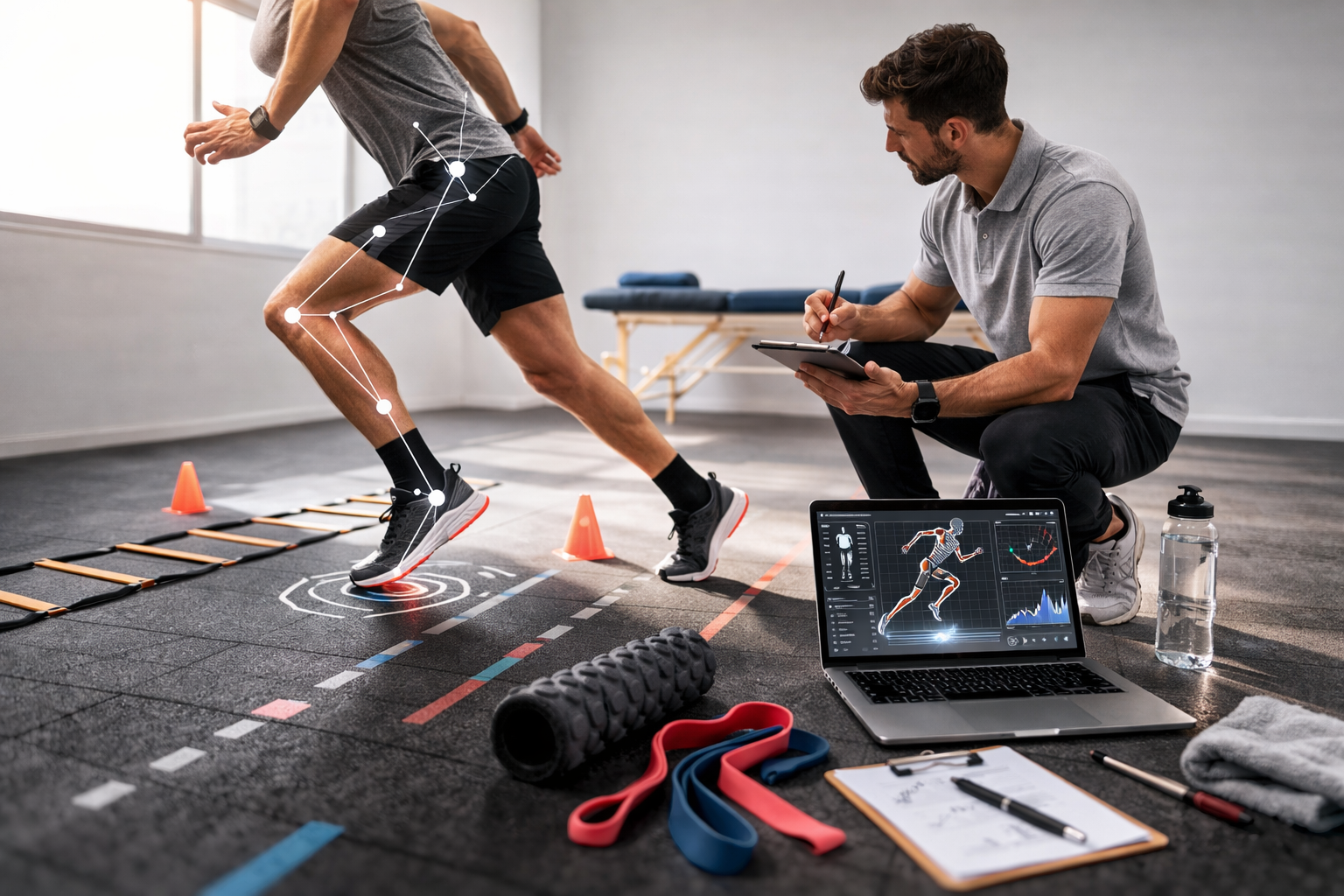
When we talk about sports performance, many people immediately think about training more hours, increasing intensity or adding more load as quickly as possible.
However, real improvement doesn’t always come from doing more. It often depends on something much more important: how your body moves, how it tolerates load and how it recovers after effort.
In clinical practice, we see this frequently. Athletes who train consistently, take care of themselves, and still feel they are not progressing, experience recurring discomfort or notice their body is not responding as it should.
The body cannot perform well when it compensates
Performance is not sustained only by strength or effort. It is built on a solid movement foundation.
When the body starts compensating — even without pain — efficiency begins to decrease. Movement becomes less clean, certain structures take more load than they should and recovery is no longer optimal.
This often translates into common sensations such as:
- Fatigue appearing earlier than expected
- Recurring discomfort in the same areas
- Loss of fluidity in movement
- Difficulty tolerating higher training loads
Sometimes the issue is not a lack of training. It is that the body is working too hard to sustain something that could be done more efficiently.
Performance also means prevention
There is a common belief that injury prevention and performance are separate. In reality, they are deeply connected.
A body that moves better, distributes load efficiently and recovers properly not only reduces injury risk — it also performs better.
That’s why in sports physiotherapy we don’t only work when pain appears. We assess how movement is organised, identify limitations and detect compensations that may be slowing down progress.
This approach is directly connected to how we understand our physiotherapy services : not just treating symptoms, but analysing function to improve performance in the medium and long term.
What high performance teaches us
In elite sport, every detail matters. Physical preparation, recovery, load management and the ability to perform under pressure all form part of a very precise balance.
This is clearly reflected in Toni’s experience working in high-demand environments, which you can explore in this article about sports physiotherapy and elite performance .
From the outside, we often only see competition. But behind it there is a huge amount of silent work: load control, daily monitoring, recovery strategies and small decisions that sustain real performance.
Amateur athletes also need a strategy
You don’t need to compete at elite level to benefit from this approach.
Amateur athletes often deal with work, stress, limited recovery and inconsistent rest. In this context, managing the body properly becomes even more important.
Training better also means:
- Understanding your current limits
- Detecting compensations early
- Improving movement quality
- Recovering better between sessions
All of this has a direct impact on performance and long-term consistency.
Smarter performance
At Atfisio, we understand sports performance as a combination of movement quality, control, recovery and adaptability.
We don’t just aim for you to train more. We aim for your body to be better prepared to respond to the demands you place on it.
Because in many cases, progress doesn’t come from adding more load, but from removing what is making your body work less efficiently.
If you feel that you are training but not progressing, or that the same discomfort appears when intensity increases, it may be time to reassess how your body is moving.
👉 If you’d like to review your case individually, you can book your appointment here .