
Lower back pain when cycling: causes and how your position affects your spine
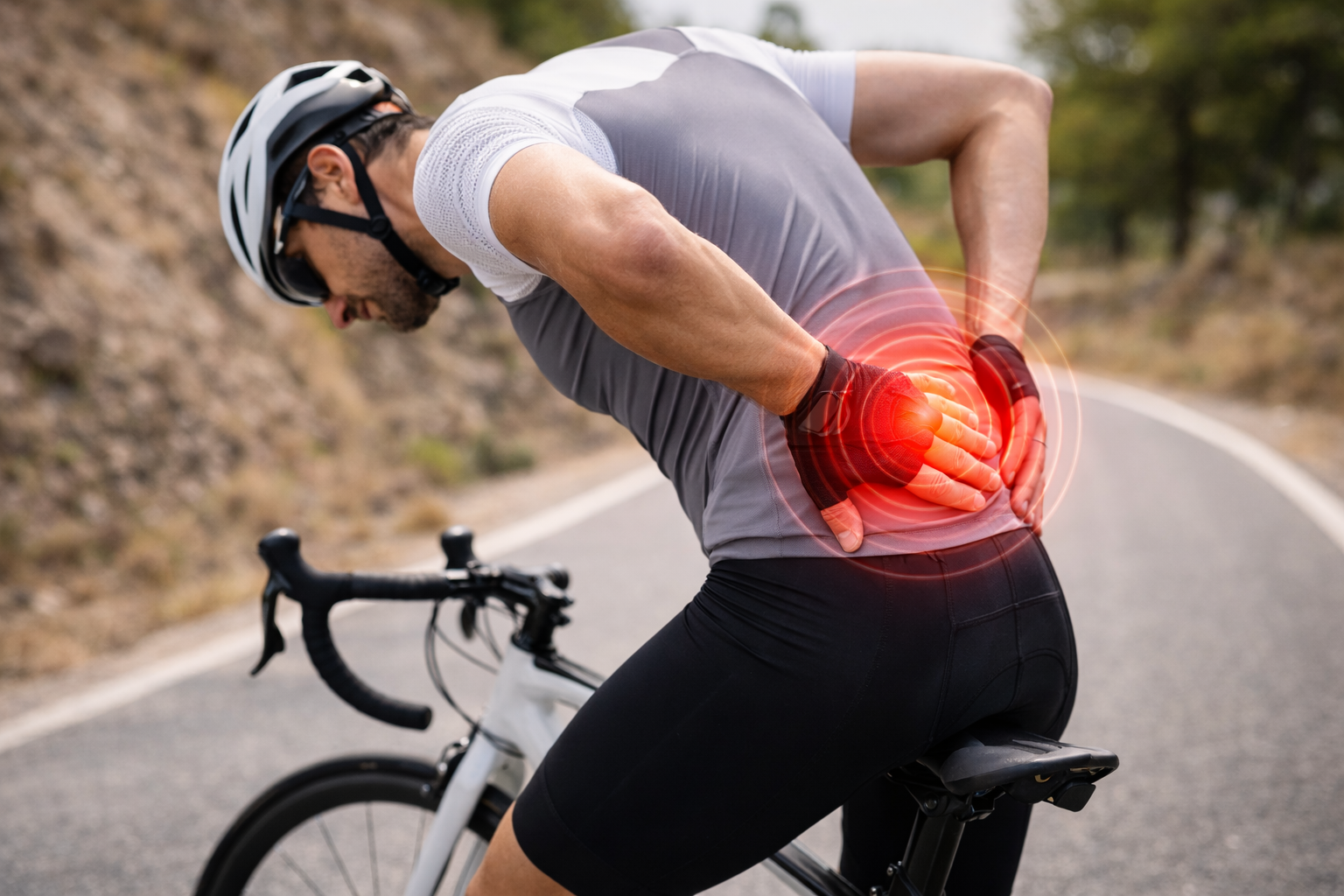
Lower back pain when cycling is a common issue, especially during longer rides or after increasing training volume.
It usually develops gradually and tends to appear when the body can no longer compensate for inefficient movement or poor positioning.
Why does lower back pain appear?
The lower back plays a key role in stabilising your position on the bike.
When that stability is compromised, the lumbar area starts to compensate and becomes overloaded.
Most common causes
- excessive forward position
- limited hip mobility
- poor pelvic control
- lack of core stability
- incorrect saddle position
- fatigue and accumulated load
Lower back pain is often the result of repeated stress rather than a single mistake.
When the bike setup influences your back
A saddle that is too high or too far back can increase tension in the posterior chain.
Handlebar position also plays a major role in how your spine is loaded.
When the body is the limiting factor
Even with a good bike setup, limited mobility or poor control can lead to compensation patterns.
The lower back often absorbs stress when the hips or core are not working efficiently.
How bike fitting can help
A proper assessment allows us to understand how your spine behaves during pedaling and how load is distributed.
This helps reduce tension, improve posture and make your position more sustainable over time.
Conclusion
Lower back pain when cycling is not something you should normalise.
Understanding how your body interacts with the bike is key to improving comfort and performance.
If you want to go deeper into this topic, you can read more about bike fitting and cycling biomechanics here.