
Knee pain when cycling: causes and how bike fitting can help
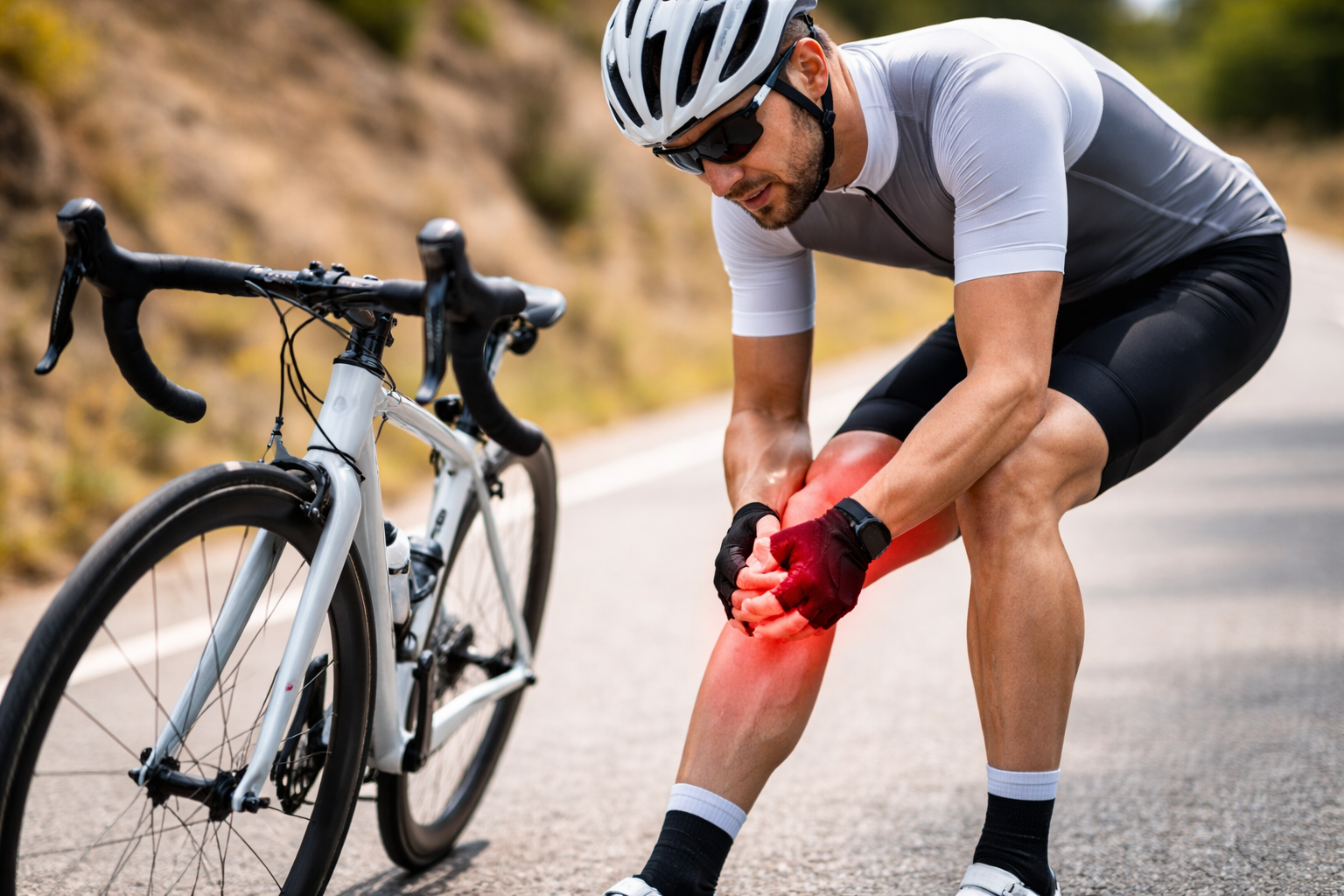
Knee pain when cycling is one of the most common issues among cyclists, whether you train regularly or just ride on weekends.
It often appears gradually: first as a mild discomfort, then as a recurring sensation in the same spot, and eventually as a more noticeable pain when intensity or volume increases.
The good news is that, in many cases, it’s not something you simply have to accept. Knee pain is often a sign that something isn’t working properly between your body, your pedaling technique and your bike setup.
Why does knee pain happen when cycling?
The knee acts as a transmission point between the hip, the foot and the pedal. When one of these elements is not working efficiently, the joint starts to absorb stress that doesn’t belong to it.
That’s why knee pain rarely has a single cause. Sometimes it’s related to bike setup, sometimes to physical limitations, and very often to a combination of both.
Most common causes
- saddle height too high or too low
- incorrect saddle setback
- poor cleat position
- lack of hip stability
- mobility differences between legs
- poor motor control while pedaling
- sudden increase in training load or intensity
In many cases, knee pain is not caused by a single obvious mistake, but by small misalignments repeated thousands of times during each ride.
Not all knee pain is the same
Pain at the front of the knee is not the same as pain on the inside, outside or back.
The location can give us clues, but it’s not enough on its own. What really matters is understanding how your body moves on the bike and how load is distributed during each phase of the pedal stroke.
When the bike setup plays a bigger role than expected
A small change in saddle height, foot support or cleat alignment can alter knee tracking and completely change how the joint is loaded.
What looks like a minor adjustment on paper can become a repeated source of stress when multiplied over thousands of pedal strokes.
When the issue is not only the bike
Sometimes the bike is reasonably well adjusted, but the body cannot sustain that position efficiently.
Limited hip mobility, restricted ankle movement, poor pelvic control or asymmetries between legs can lead the knee to compensate and eventually become overloaded.
That’s why adjusting the bike without assessing the body is often not enough. And assessing the body without looking at how you ride isn’t enough either.
How a bike fitting assessment can help
A proper bike fitting allows us to analyse how your knee behaves within the full pedaling movement.
It’s not just about measuring angles, but understanding:
- how load is distributed between both sides
- how the knee moves in relation to the hip and foot
- whether compensations are present
- if your position is contributing to the pain
This approach allows for more precise and meaningful adjustments, with a clear goal: reduce overload, improve efficiency and prevent the issue from becoming chronic.
When should you get it checked?
- if the pain appears every time you ride
- if it comes back even after rest
- if you recently changed bike or shoes
- if you adjusted cleats, saddle or position without improvement
- if one leg feels different from the other
Conclusion
Knee pain in cycling should not be considered normal.
In many cases, it’s not about training harder, but about understanding how you ride and what your body is dealing with in every pedal stroke.
If you want to analyse your case from a clinical and functional perspective, you can book your bike fitting session in Atfisio .